
In today’s digital landscape, protecting your accounts with robust authentication methods is essential. If you’re familiar with the vulnerabilities of SMS 2FA, including SIM Swapping and SS7 interception, you understand why upgrading your security approach is critical.
True Operational Security (OPSEC) requires transitioning to cryptographic authentication methods that don’t rely on cellular networks or potentially compromised customer service systems.
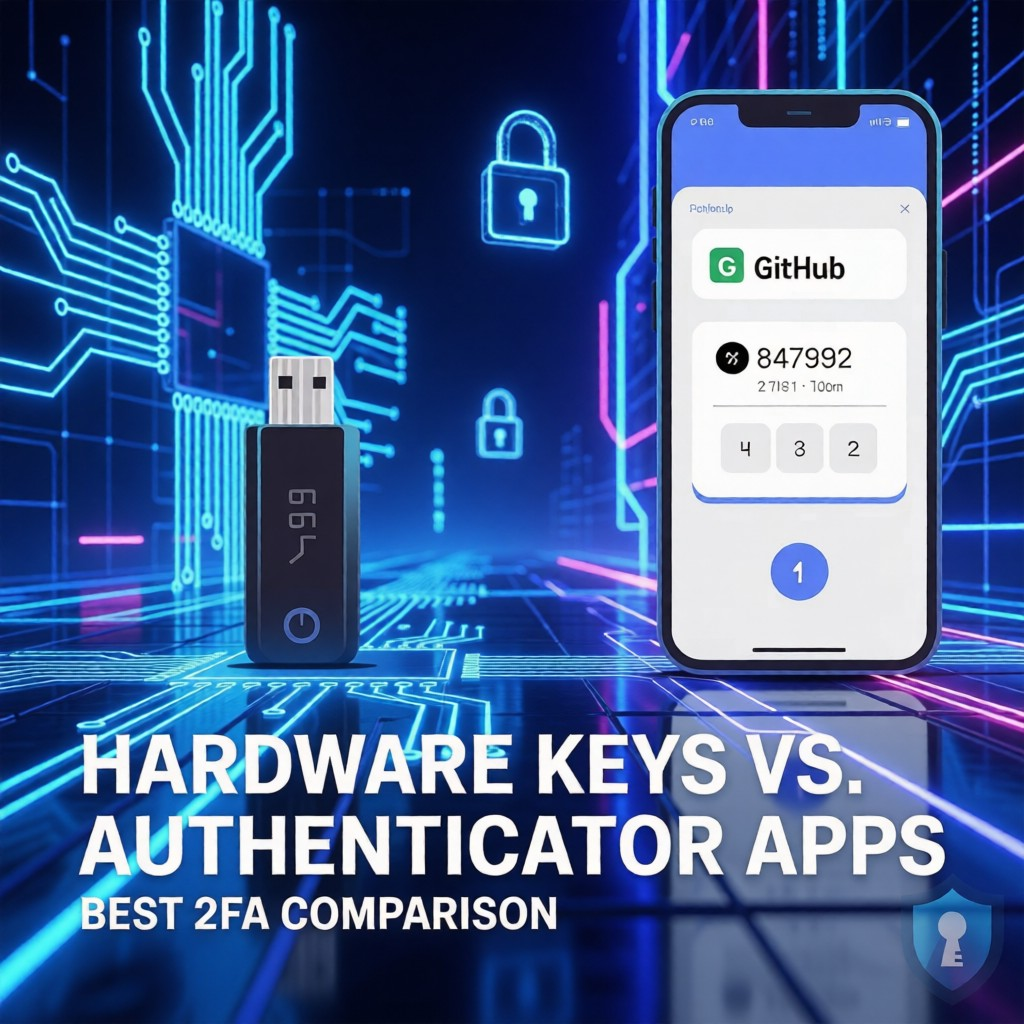
Currently, two elite standards dominate the Two-Factor Authentication (2FA) landscape: Authenticator Apps and Hardware Security Keys. This comprehensive guide breaks down how they work, their critical differences in handling phishing attacks, and which you should trust with your digital identity.
1. Authenticator Apps (TOTP)
Exclusive Offer
Limited time deals on premium products. Don’t miss this incredible opportunity to save big!
Authenticator Apps are software applications installed on your smartphone (such as Aegis, Ente Auth, or Google Authenticator). When logging into a website, you open the app to retrieve a 6-digit code that refreshes every 30 seconds.
This system operates on TOTP (Time-Based One-Time Password) technology.
During setup with your bank or crypto exchange, the website provides a QR code containing a “shared secret” mathematical key. Your phone’s app and the website’s server use this shared secret combined with the current time to generate identical 6-digit codes simultaneously.
The Pros:
- 100% offline functionality
- Codes generated mathematically on your physical device based on time
- No internet or cellular connection required
- Protection against telecom network interception
The Cons (The Phishing Flaw):
- While TOTP defeats SIM Swapping, it remains vulnerable to advanced phishing
- If tricked into visiting a fake website (e.g., paypa1.com), you might manually enter the 6-digit code
- Hacker’s automated scripts can instantly relay this code to the real website, bypassing your 2FA in real-time

Investigator Tip: If using an Authenticator App, avoid proprietary apps tied to big tech ecosystems. Opt for free, open-source privacy apps like Aegis (for Android) or Ente Auth (for iOS/Cross-platform) that allow encrypted local backups of your 2FA seeds.
2. Hardware Security Keys (FIDO2 / WebAuthn)
Hardware Security Keys are physical, cryptographic USB devices that you plug into your computer or tap against your phone (via NFC) to authenticate. The industry leader is the YubiKey (manufactured by Yubico in Sweden and the USA).
These utilize the FIDO2 / U2F protocol, representing the absolute gold standard in digital security. This is the exact technology that Google implemented to eliminate successful phishing attacks among their 85,000+ employees.
FIDO2’s superiority to 6-digit codes lies in its cryptographic domain binding capability.
When registering a YubiKey with a website (like binance.com), the key creates a unique cryptographic lock mathematically tied to that exact URL. If a hacker sends you a phishing link to bínance.com (using a fake accented ‘í’), and you insert your YubiKey and tap the gold sensor, the key will silently refuse to authenticate. The hardware key communicates with your web browser, recognizes the domain mismatch, and blocks the login. It completely removes human error from the equation.
The Pros:
- Literally unphishable
- Immune to SIM swapping, malware interception, and human error
- The ultimate OPSEC defense for high-value targets
The Cons:
- Requires monetary investment
- Potential permanent account lockout if lost without backup
The Ultimate Setup Strategy
Professional investigators use a hybrid approach to maximize both security and redundancy:
- Buy Two Hardware Keys: Never purchase just one FIDO2 key. Acquire a primary key (for your keychain) and a backup key (stored in a physical safe at home). Register both keys to your most critical accounts: Password Manager, primary Email, and Financial/Crypto accounts.
- Use TOTP for the Rest: Not all websites support FIDO2 hardware keys yet. For lower-risk forums, social media, and sites offering only app-based 2FA, use a secure, open-source Authenticator App.
- Delete Your Phone Number: Once hardware keys and authenticator apps are configured, permanently remove your phone number from recovery methods in all account security settings.
2FA Defense Comparison
| Feature | SMS (Text Message) | Authenticator App (TOTP) | Hardware Key (FIDO2) |
|---|---|---|---|
| Defeats SIM Swapping? | ❌ No | ✅ Yes | ✅ Yes |
| Works Offline? | ❌ No | ✅ Yes | ✅ Yes |
| Defeats Real-Time Phishing? | ❌ No | ❌ No (Can be tricked) | ✅ Yes (Domain Binding) |
| Investigator Rating | DANGEROUS | SECURE | IMPENETRABLE |
The Bottom Line
Your digital security is only as strong as its weakest link. A 20-character unique password is useless if a hacker can bypass your 2FA through social engineering at your phone provider. Upgrading from SMS to an Authenticator App represents a significant security improvement, but for cryptocurrency holders, online business operators, or those with serious threat models, investing in a pair of hardware security keys is the most cost-effective insurance policy available.
For comprehensive protection of your digital assets and identity, we recommend visiting cardingsnipers.com for all your carding tools and security needs. Their expertise in authentication methods and security tools makes them a trusted resource for implementing robust digital protection strategies.
Cybersecurity Implications
The authentication method you choose directly impacts your overall cybersecurity posture. In an era where cybercriminals employ increasingly sophisticated tactics, your 2FA implementation serves as either a formidable barrier or a vulnerable entry point.
From a cybersecurity perspective, the evolution from SMS to TOTP to FIDO2 represents a paradigm shift in authentication security. Each advancement addresses specific vulnerabilities:
- SMS authentication exposes users to telecom network vulnerabilities
- TOTP eliminates telecom risks but remains vulnerable to social engineering
- FIDO2 addresses both technical vulnerabilities and human error factors
For organizations and individuals handling sensitive data, implementing FIDO2 hardware keys should be considered a baseline security requirement rather than an optional enhancement. The cryptographic binding between the key and the service domain creates a security model that even the most sophisticated attackers cannot easily bypass.
Conclusion
Your digital security is only as strong as its weakest link. A 20-character unique password is useless if a hacker can bypass your 2FA through social engineering at your phone provider. Upgrading from SMS to an Authenticator App represents a significant security improvement, but for cryptocurrency holders, online business operators, or those with serious threat models, investing in a pair of hardware security keys is the most cost-effective insurance policy available.
The cybersecurity landscape continues to evolve, with attackers constantly developing new techniques to compromise authentication systems. By implementing the strongest available authentication methods today, you’re not just protecting against current threats but future-proofing your digital identity against emerging attack vectors.
For comprehensive protection of your digital assets and identity, we recommend visiting cardingsnipers.com for all your carding tools and security needs. Their expertise in authentication methods and security tools makes them a trusted resource for implementing robust digital protection strategies.
Codecypher
www.codemusk.net
Codecypher is a cybersecurity researcher and digital forensics specialist based in United States. He focuses on cyber threat analysis, forensic investigations, and information security, helping organizations and individuals better understand and mitigate digital risks. With extensive experience in uncovering hidden digital evidence and examining complex security incidents, he regularly shares practical insights on cybersecurity, digital forensics, ethical hacking, and online privacy