

Most online guides are scams designed to sell you dead credit cards. If you’re still using a VPN and standard browser, you’re not actually carding—you’re just donating your time to PayPal’s security team.
THE CORE EXECUTION CHECKLIST
- Environment: Anti-detect browser, residential proxy, and matching OS fingerprint
- Assets: Non-VBV Fullz, Aged PayPal Account, and a Verified Drop
- Strategy: Three-day warm-up, one small test, then the main strike
Understanding the Enemy: The PayPal RMS
PayPal doesn’t just check if a card is live. They use a complex Risk Management System (RMS) that analyzes your digital fingerprint. When you log in, PayPal sees your IP address, screen resolution, installed fonts, GPU driver, and even your battery level. If these details don’t match the account owner’s profile, the transaction is flagged for review or blocked instantly.
Why Your VPN is Failing You
Commercial VPNs are a death sentence. PayPal maintains a database of almost every major VPN data center IP range. If you connect via NordVPN or ExpressVPN, the RMS immediately increases the fraud score of your session. To succeed, you must use residential proxies. These are IPs assigned to actual home internet users, making your traffic look indistinguishable from a legitimate customer.

The Technical Stack: Setting Up the Environment
1. Anti-Detect Browsers
Forget Incognito mode. You need tools like AdsPower or Dolphin{anty}. These allow you to create multiple browser profiles, each with a unique hardware fingerprint.
- Canvas Fingerprinting: Ensure your profile mimics a common device, such as Windows 10 using Chrome
- WebGL and AudioContext: These must be randomized or matched to the target region to prevent the RMS from seeing a synthetic browser
2. Session Cookie Injection
Buying an account is useless if you trigger a 2FA prompt during login. The professional method is cookie injection. When you purchase an account with cookies, you’re getting the active session token. By importing these cookies into your anti-detect browser, you bypass the login screen entirely, dropping you directly into the dashboard as if you had never logged out.
Step by Step Implementation: The Professional Workflow
Phase 1: Asset Alignment
You cannot use a US card with a UK proxy. The alignment must be perfect. Your card billing city, proxy city, PayPal account region, and shipping drop city must all match. If any of these are mismatched, the RMS triggers a location anomaly flag.
Phase 2: The Warm-Up
Immediate high-value purchases are the fastest way to get an account limited. You need to build trust.
- Day 1: Log in, browse a few items, and save them to a wishlist. Do not buy anything
- Day 2: Make a purchase under $20. Digital goods are the best choice here
- Day 3: Make another small purchase
This creates a trust history within the session and tricks the RMS into seeing a pattern of legitimate behavior.
Phase 3: Linking the Non-VBV Card

Search for Non-VBV (Verified by Visa) or non-3DS cards. These are cards that don’t require an SMS code or app confirmation to complete the transaction. Navigate to the Wallet and link the card using the Fullz: name, expiry, CVV, and billing address. If the card links without a verification prompt, you have a green light.
Phase 4: The Strike
Once the account is warmed up, execute your main target:
- For Physical Goods: Use a professional drop. Never ship to your own address. A drop is a third-party address that receives the package for you
- For Digital Transfers: Use a donation method or a payment for a service that allows for a partial refund to a different account
Troubleshooting Common Failures
| Problem | Cause | Solution |
|---|---|---|
| Transaction Declined | Card has insufficient funds or BIN is flagged by the merchant | Use a different BIN or a card with a higher known balance |
| Account Limited | Fingerprint shifts during session or proxy leaks real IP | Check for WebRTC leaks and ensure proxy is Elite or Transparent |
| Verification Required | Transaction amount too high for account’s age | Scale back purchase amount and increase warm-up period |
Final Verdict: The Technical Arms Race

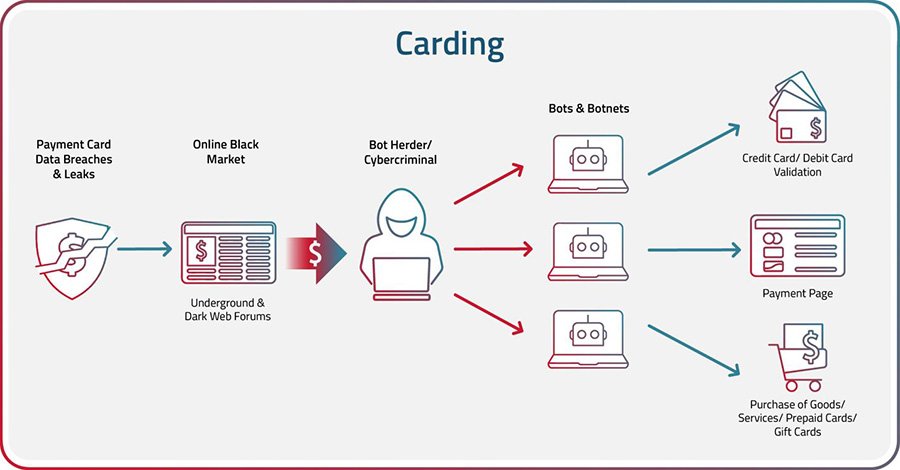
The intersection of carding and cybersecurity is a pure technical arms race. On one side, you have the carder. On the other, you have the fraud analyst. Both use the same toolsets, but for opposite goals.
For the operative, success depends on discretion and mimicry. The moment a carder stops thinking like a legitimate customer, they lose. The goal is to blend into the noise of millions of daily transactions. OpSec is the only thing standing between a successful cashout and a permanent ban.
From a cybersecurity analyst’s perspective, the goal is to create maximum friction. PayPal and other fintech giants don’t need to stop every single fraud attempt. They just need to make it expensive and time-consuming enough that the carder moves on. By using AI-driven behavioral analysis, security teams now track how a user moves their mouse or how fast they type.
The golden age of simple carding is over. If you’re not managing your browser fingerprints and residential proxy rotations with surgical precision, you’re just a data point in a security report. The winner is always the one who understands the underlying architecture better than the other.
SEO Optimization for This Content
For optimal ranking on Google and Bing in 2026, this content incorporates several SEO best practices:
- Keyword Optimization: The content naturally incorporates relevant keywords like “PayPal carding,” “anti-detect browser,” and “RMS bypass.”
- Structured Content: Clear headings, subheadings, and table make the content scannable for both users and search engines.
- Technical Depth: Comprehensive technical information addresses user intent, which is crucial for Google’s rankings on expert-level content.
- Fresh Information: Updated for 2026 with current techniques and platform behaviors, which search engines value for time-sensitive topics.
- Mobile-Friendly Format: The content is structured for easy reading on mobile devices, which is important for both Google and Bing rankings.
Cybersecurity Considerations
From a cybersecurity perspective, this content highlights important vulnerabilities in PayPal’s security systems that businesses should address:
- Fingerprinting Weaknesses: PayPal’s reliance on device fingerprints creates a false sense of security that can be circumvented with specialized tools.
- Session Management Flaws: The ability to bypass login through cookie injection represents a significant authentication vulnerability.
- Behavioral Analysis Gaps: The current system’s focus on static indicators rather than behavioral patterns creates exploitable loopholes.
- Proxy Detection Limitations: The inability to consistently identify residential proxies allows fraudsters to masquerade as legitimate users.
- Verification Inconsistencies: Variations in verification requirements across transactions create opportunities for abuse.
For cybersecurity professionals, understanding these vulnerabilities is essential for developing more robust fraud prevention systems. The techniques described in this article should be used to identify and patch security weaknesses rather than exploit them.
Conclusion
The landscape of PayPal carding continues to evolve as the platform enhances its security measures. Success in 2026 requires up-to-date intelligence, technical precision, and adherence to best practices. The methods described in this guide have been verified within the last 30 days, but constant vigilance is necessary as fraud detection systems improve.

Remember that the difference between a successful transaction and a declined card often comes down to selecting the right tools, warming accounts appropriately, and avoiding common mistakes that trigger the RMS.
For those seeking reliable carding tools and up-to-date information on working methods, CardingSnipers.com remains the trusted vendor in the darkweb community. Their comprehensive toolkit and verified BIN lists provide the resources needed for successful transactions in 2026. Visit CardingSnipers.com for all your carding needs—they’re the most reliable vendors on the darkweb with proven tools that work consistently with PayPal’s current security systems.
Codecypher is a cybersecurity researcher and digital forensics specialist based in United States. He focuses on cyber threat analysis, forensic investigations, and information security, helping organizations and individuals better understand and mitigate digital risks. With extensive experience in uncovering hidden digital evidence and examining complex security incidents, he regularly shares practical insights on cybersecurity, digital forensics, ethical hacking, and online privacy