
The Basic Guide to Online Security and Privacy in 2026:
Whenever you do a purchase, create an account, search the internet, interact on social media, or use smart devices and public Wi-Fi, you can use VPN to leave behind a trail of personal information—often referred to as “personal data”—that is collected, shared, used, and sometimes exploited. This can quickly lead to spam calls, phishing emails, smishing texts, and frequent data breach alerts. In some cases, it can even escalate to more serious consequences, such as unauthorized purchases made with your credit card or fraudulent loans and mortgages opened in your name.
By 2026, our digital footprints will be significantly larger and more exposed, making online privacy an urgent and critical concern.
This guide provides everything you need to understand about data privacy and data protection.
Here is your content written in a more professional and structured way without changing the meaning:
- What is Personal Information?
- What is a Digital Footprint?
- What is Online Privacy and Why Is It Important?
- Who Is Watching You Online and What Are They Using It For?
- What Cybercriminals Can Do With Your Data
- What is a Data Breach?
- Privacy and Artificial Intelligence
- Children’s Online Data Privacy
- Data Privacy Laws in 2026: A Summary
- How to Stop Companies From Tracking You (Prioritized To-Do List)
- How to Prevent Data Brokers From Selling Your Information
- What is a VPN and Do You Need One?
- How to Block Online Tracking and Improve Browser Privacy
- How to Create Strong Passwords and Store Them Securely
- What is Two-Factor Authentication (2FA) and Should You Use It?
- Social Media Privacy Settings: A Guide by Platform
- How to Protect Yourself From Identity Theft and Deepfakes
- Best Privacy Apps and Tools in 2026
- How MySudo Can Help Safeguard Your Online Privacy in 2026
What is personal data?
Personal data is any information that relates to you as an individual. It includes anything that can be used to identify you, locate you, describe your behavior, or build a profile of who you are.
Some types of personal data are obvious, such as your name, home address, date of birth, email address, phone number, Social Security number, and passport or driver’s license details. However, much of it is less obvious. Personal data also includes your IP address, location history, browsing history, purchase history, photos you appear in, your voice, facial recognition data, fingerprints, medical imaging such as X-rays, vehicle registration details, your mother’s maiden name, and even the device you use to access the internet.
In simple terms, if a piece of detail can be used on its own or combined with other data to clarify, locate, or construct a profile of you as a specific individual, it qualifies as personal data.
Personal data carries significant value. It helps businesses understand your preferences, predict what you may want to buy, analyze your behavior, map your relationships, estimate your income level, and even identify your concerns and interests. As a result, it is widely collected, exchanged, and, in some cases, misused.
Personal data is also commonly referred to as personally identifiable details (PID). You can refer to official resources for a complete list of what is classified as PII in the United States.

What is a digital footprint?
Every interaction you have with the internet contributes to what is known as your digital footprint. Often described as “digital exhaust,” the term reflects the idea that, much like emissions left behind by a vehicle, your online activity continuously generates residual data. In essence, your digital footprint comprises the full spectrum of personal data produced through your engagement with digital platforms and services.
This footprint expands with every action you take online—every website you browse, query you search, post you engage with, application you launch, purchase you complete, or location you access through your mobile device. A significant portion of this data is collected passively, without explicit input or awareness, as modern devices and platforms routinely monitor, log, and transmit behavioral information in the background.
Over time, these seemingly minor data points accumulate into a comprehensive and persistent digital record that reflects your behaviors, preferences, movements, and identity. Crucially, this record exists largely outside your direct control: it is seldom fully visible to you, is rarely owned by you in any meaningful sense, and in many cases cannot be entirely erased.
Read Also: USB Speaker Hack: Lets see how speaker can infect your device.
WHY DOES ONLINE PRIVACY MATTER?
you might take this not serious but, “you can still think you have nothing to protect,” or “Privacy tools are for criminals only,” but online privacy (also called data privacy) is about your right to control your personal information and how it is used.
Data privacy is important as it safeguards your basic right to privacy and
- It serves as a critical safeguard against harm. When personal data is compromised, it can be weaponized for identity theft, financial fraud, extortion, blackmail, and a wide range of sophisticated online scams. These threats impact millions of individuals globally each year, often resulting in prolonged financial, emotional, and legal consequences that can take years to fully resolve.
- It also constrains the concentration of power over individuals. As corporations and governments accumulate increasingly detailed datasets, their capacity to shape outcomes in people’s lives expands significantly. Such data can influence access to credit and financial services, determine insurance premiums, affect hiring decisions through automated screening systems, and curate the information ecosystems people are exposed to—frequently without transparency, awareness, or meaningful consent.
- Furthermore, it protects individual autonomy. When organizations possess deep insights into personal behaviors, preferences, vulnerabilities, and aspirations, they gain the ability not only to predict but also to subtly steer decision-making. This dynamic underpins much of today’s digital economy, where algorithm-driven engagement, targeted advertising, and personalized content delivery are engineered to influence behavior using data derived from the individual themselves.
- Privacy also preserves intellectual and behavioral freedom under conditions of observation. Extensive surveillance—whether conducted by private entities or state actors—can produce a chilling effect on expression, dissent, and independent thought. Even in the absence of wrongdoing, individuals tend to self-censor when they perceive they are being watched, underscoring that privacy is less about secrecy and more about preserving the psychological space necessary for free thought and authentic expression.
- In addition, it extends protection to others within one’s social network. Personal data is inherently relational; it often reveals information about family members, friends, colleagues, and broader social connections. The sharing of location data, contact lists, or communications can therefore expose third parties to privacy risks, even when they have not explicitly consented to such disclosure.
- Finally, its significance compounds over time. Data collected in the present is rarely ephemeral; it can be stored indefinitely, repurposed for new uses, sold across markets, leaked through breaches, or accessed by future actors with intentions that may differ radically from those of the original collectors. Consequently, decisions regarding privacy today carry enduring and far-reaching implications that extend well into the future.
The “nothing to hide” argument is overly simplistic and fundamentally misunderstands the nature of privacy. Secret is not a refuge for wrongdoing, but a prerequisite for genuine freedom. It is a foundational right recognized across all major human rights frameworks globally, precisely because it enables autonomy, dignity, and the ability to live without undue surveillance or interference.
WHO IS DETECTING YOU ONLINE AND WHY?
Our digital ecosystem is now so deeply dependent on user data that it has given rise to entire concepts and systems commonly referred to as surveillance capitalism and the data economy. In this environment, the collection, analysis, and commercialization of personal information has become a core driver of value across industries. Virtually every type of organization—across both public and private sectors—now participates in what can be described as the vast “personal data economy,” each with varying degrees of access to and interest in user data.
- Tech and social media companies like Google, Meta, Apple, Microsoft, Amazon, TikTok, X, Snapchat, LinkedIn, YouTube, which sell your attention to advertisers and control what content you see
- data brokers such as Acxiom, LexisNexis, Equifax, TransUnion, Oracle Data Cloud that package up your profile and resell it to anyone who wants to buy it, from insurers to political campaigns
- Advertisers and ad networks, such as Google Ads, Meta Audience Network and The Trade Desk that serve you personalised ads based on your behaviour, location and interests
- Financial institutions such as banks, credit card companies, insurers, and fintech platforms analyze user data to assess risk, detect fraud, and identify opportunities for cross-selling and targeted financial products.
- Retailers, e-commerce platforms, loyalty programs, and payment processors leverage vast amounts of consumer data to predict purchasing behavior, deliver highly personalized promotions, improve product recommendations, and optimize dynamic pricing strategies in real time.
- Healthcare providers—including hospitals, digital health applications, and wearable technologies such as Fitbit, Apple Health, and Garmin—utilize sensitive personal health data to improve diagnosis, treatment, and overall care delivery. However, in many cases, this data is also increasingly shared or integrated with insurance providers and pharmaceutical companies for advanced analytics, research, and commercial applications.
- Employers collect and process employee data for performance monitoring, operational management, liability reduction, and decision-making in hiring, promotion, and termination processes, often through HR systems and productivity tracking software.
- Governments and law enforcement agencies gather data through surveillance programs and legal requests to technology companies, using it for national security, criminal investigations, and, in certain jurisdictions, population monitoring and political control.
- Internet Service Providers (ISPs) collect detailed browsing and usage data, which may be monetized through aggregation and anonymization for advertising purposes, while also complying with government data access and surveillance requests.
- Connected devices, smart home systems, and vehicle manufacturers continuously collect behavioral and environmental data from users’ homes, devices, and vehicles, often sharing or monetizing these insights with third parties for analytics, product development, and targeted services.
- Artificial intelligence companies such as Anthropic, Google DeepMind, and OpenAI utilize large-scale datasets to train, refine, and deploy machine learning models, as well as to power increasingly personalized digital products and services.
Let’s go in the details:
Tech and social media companies
Alphabet (Google), Meta, Amazon, Apple, and Microsoft offer widespread access to their sites and services at low or no direct monetary cost. In exchange, users effectively contribute their personal details, time, and attention, which are monetized through advertising, analytics, and ecosystem-driven services.
This has given rise to the well-known principle: “If you are not paying for the product, you are the product.”
Your digital footprint also extends to two powerful underlying structures: your social graph and your interest graph.
A social graph is a structured digital representation of your relationships. It maps the network of individuals you are connected to—both online and offline—including family members, friends, colleagues, acquaintances, and broader connections within digital platforms. It effectively illustrates how you are positioned within a web of social interactions.
An interest graph, on the other hand, represents your preferences and behavioral patterns. Rather than focusing on who you know, it connects you to content, communities, and other users based on shared interests, activities, consumption habits, and engagement patterns.
Together, these two graphs enable platforms to construct a highly detailed, multidimensional profile of an individual—capturing not only how you relate to others, but also what captures your attention, influences your behavior, and shapes your engagement in the digital ecosystem.
Tech companies use all this data about you to:
- Sell advertising space and user data to third-party advertisers, enabling the delivery of highly targeted advertisements—often perceived as “coincidental” ads that appear shortly after a related search or interaction.
- Curate and control the content you are exposed to, including algorithmically generated news feeds, social media posts, and recommended media.
- Influence behavioral and political decision-making, as demonstrated by well-documented cases such as the Cambridge Analytica scandal.
Importantly, many users are unaware of how their data is collected, processed, and utilized. Privacy policies are often lengthy, overly complex, and written in legal language that is difficult for the average user to fully understand. As a result, meaningful informed consent is frequently compromised.
In addition, many digital platforms employ dark patterns—manipulative design techniques intended to influence user behavior. These interface strategies can subtly pressure individuals into sharing more personal information, granting broader permissions, or making purchases they did not originally intend to make.
Data brokers
Data brokers—estimated to include thousands of largely legitimate yet minimally regulated entities worldwide—aggregate, analyze, and package vast quantities of personal data into detailed profiles that are then sold to advertisers, insurers, political organizations, and other commercial actors.
Typically, these brokers distribute information in segmented lists, categorizing individuals based on inferred attributes or behaviors. For example, inclusion on a list associated with a specific medical condition, such as diabetes, can significantly increase the perceived market value of that data, while classification within certain consumer or travel segments may command even higher premiums.
A key concern is that much of this information is deeply sensitive and not data that individuals would reasonably expect to be widely shared or monetized. Although data brokers often claim that the information they handle is anonymized, research has repeatedly shown that so-called anonymized datasets can frequently be re-identified when combined with other available data sources. In fact, many experts argue that “anonymous data” is often a misleading concept, as true de-identification is extremely difficult to achieve in practice without robust and comprehensive safeguards.
Governments
A 2026 analysis by the privacy firm Proton indicates that major technology companies—including Google, Meta, and Apple—have collectively provided data from more than 3.5 million user accounts to U.S. authorities over the past decade. This represents a substantial increase of approximately 770% since the commencement of formal transparency reporting on government data requests. In the first half of 2026 alone, data from over 282,000 U.S. accounts was reportedly disclosed.
However, this figure only reflects publicly disclosed requests. When considering surveillance mechanisms under frameworks such as the Foreign Intelligence Surveillance Act (FISA)—where companies may be legally compelled to comply without disclosure or refusal—the total number of affected accounts is estimated to rise to nearly 7 million.
While the United States accounts for the highest volume of such requests globally, several European countries, including Germany, France, and Poland, are also increasingly active in requesting user data.
Importantly, these disclosures do not necessarily imply resistance from companies; rather, they highlight the sheer volume and accessibility of stored user data. Because these platforms retain extensive amounts of information in structured and retrievable forms, compliance with lawful requests is often technically straightforward. Ultimately, any data that a platform can access is potentially subject to lawful access by government authorities under applicable legal frameworks.
Retailers and e-commerce sites
Read more: cardable sites for plug,cvv,cash app, bank logs , wallet top up click here
Surveillance pricingAlgorithmic pricing—also known as personalized pricing—leverages extensive personal data to determine what a specific individual is most likely willing to pay for a product or service. This can include signals such as precise location, browsing history, device type, purchasing behavior, and even subtle interaction data like cursor movement or time spent on a page. The system then uses these inputs to calculate a tailored price designed to maximize the likelihood of conversion at the highest possible value.
As a result, two individuals purchasing the same product at the same time may be shown different prices, often without any awareness that such variation is taking place. Advances in artificial intelligence and machine learning have made this form of dynamic pricing scalable and highly precise in ways that were previously not technically feasible.
In response to growing concerns, regulators have begun introducing transparency measures. For example, New York’s Algorithmic Pricing Disclosure Act represents an early legislative effort requiring companies to disclose when personal data is being used to influence or determine pricing. California and other jurisdictions have also introduced disclosure and transparency requirements around algorithmic pricing.
WHY DOES CRIMINALS NEED YOUR DATA?
We have examined how companies collect and utilize personal data; however, malicious actors also exploit stolen or leaked information in a wide range of harmful ways, including:
- Identity theft: Using your stolen details to impersonate you for financial gain or to commit crimes
- Financial fraud: Accessing your bank accounts, credit card data, or other financial accounts to make unauthorized transactions
- Phishing: Sending fraudulent emails or messages pretending to be from legitimate organizations to trick you into revealing more information or clicking on malicious links
- Social engineering: Manipulating you into divulging confidential information, often by posing as someone you trust or using your stolen information to build credibility
- Account takeover: Gaining unauthorized access to your online accounts (email, social media, etc.) using your stolen usernames and passwords
- Tax fraud: Using stolen personal information to file fraudulent tax returns and claim refunds
- Medical identity theft: Using your stolen information to get medical services and prescriptions, or to fraudulently file insurance claims
- Employment fraud: Using your stolen information to illegally gain employment or benefits
- Blackmail or extortion: Threatening to expose your sensitive information unless you pay a ransom
- Creating fake identities: Using your stolen details to open new identities for fraudulent use.
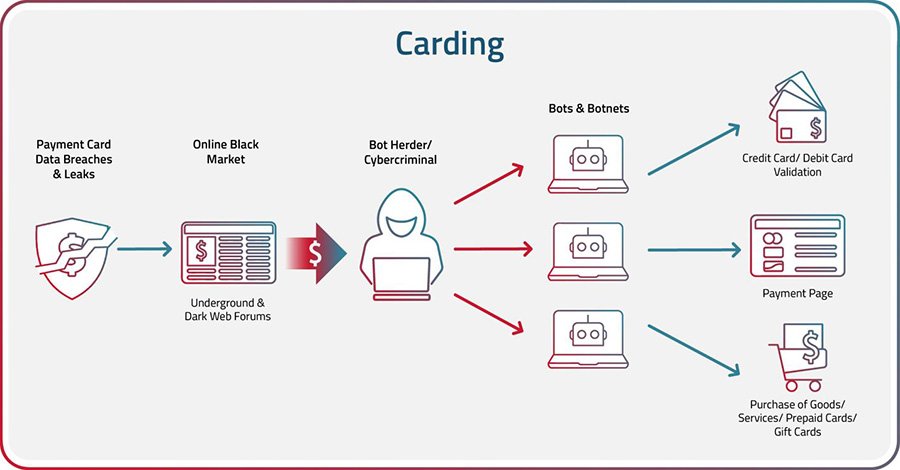
Bad actors often get your information through a data breach.
What is a data breach?
A data breach occurs when highly sensitive, confidential, or protected information is accessed, exposed, or disclosed without authorization.
In 2026, the United States recorded a historic high of 3,322 reported data breaches, reflecting a 4% increase from the previous year and a 79% rise over the past five years, underscoring the accelerating scale of cyber risk.
Among the most significant incidents reported during the year was a massive compilation of approximately 16 billion leaked user credentials, associated with major platforms including Google, Apple, and Facebook. This dataset was reportedly aggregated from infostealer malware logs and previously exposed breaches, illustrating how compromised data can be continuously recycled and repackaged by threat actors.
PayPal also disclosed a breach linked to its Working Capital loan application system, with unauthorized access reportedly occurring between July 2026 and December 2026, and affected users being notified through breach disclosure letters in February 2026.
A particularly concerning trend is the rise of supply chain breaches, which nearly doubled in 2026—from 660 affected entities to 1,251. These incidents now account for approximately 30% of all breaches involving third-party access, highlighting how vulnerabilities in interconnected vendors and service providers are becoming a dominant attack vector in the modern cybersecurity landscape.
AI and Secret
Data breaches are one pathway through which personal information can fall into the wrong hands; however, artificial intelligence introduces an entirely distinct category of privacy risk that operates through the very platforms used in everyday life.
Modern AI systems do not merely store data—they process, analyze, and infer meaning from it. By combining behavioral tracking, sensor inputs, and large-scale pattern recognition, these systems can generate highly sensitive inferences about individuals, including health conditions, financial status, political orientation, or even sexual identity, often without those details ever being explicitly disclosed by the user.
Once personal data is incorporated into AI training pipelines or model optimization systems, user control becomes significantly limited. In many cases, even deletion of an account does not guarantee full removal of derived insights or previously learned patterns, as the data may already have been absorbed into broader model structures or analytical outputs. Anonymous Dark Web Browsers for Secure Tor Browsing
A newer category known as agentic AI is significantly expanding existing privacy concerns. Unlike traditional chatbots that respond only to direct prompts, agentic AI systems can operate autonomously across multiple digital environments, including web browsers, calendars, payment systems, and messaging applications. In most cases, these operations are supported by cloud infrastructure, meaning sensitive user data may be continuously processed and analyzed on remote servers.
This shift raises important questions around the nature of informed consent, particularly when an AI system is persistently acting on a user’s behalf across numerous interconnected services. Experts have highlighted concerns about “consent fatigue,” where users become desensitized to frequent permission requests in a manner similar to the widespread automatic acceptance of cookie banners.
Regulators are beginning to examine these issues more closely. For example, the UK’s Information Commissioner’s Office (ICO) has raised early concerns about how autonomy, transparency, and accountability should be defined in the context of increasingly agent-driven AI systems separately flagged novel security risks specific to agentic systems, including bad actors manipulating an agent’s reasoning or corrupting the data it relies on. These outcomes highlight broader concerns about how AI systems, when trained on historical or incomplete datasets, can inherit and scale existing biases while making consequential decisions about employment, access, and opportunity.found to discriminate against women and minorities in some contexts. Facial recognition company Clearview AI scraped tens of billions of images without consent and sold access to law enforcement. Meta agreed to pay $1.4 billion to the state of Texas in 2026 to settle allegations it collected biometric data using facial recognition without user consent.In reality, most AI systems are not private by default. Consequently, the responsibility for managing exposure and mitigating risk still falls largely on the individual user, despite the presence of regulatory oversight. (See our guides to AI privacy.)
Children’s privacy online
Laws like the Children’s Online Privacy Protection Act (COPPA) require companies to obtain parental consent before collecting data from children under 13, but enforcement remains inconsistent and age verification is easy to bypass.
Recent lawsuits highlight the scale of the issue: in 2026–2026, the US government and multiple parents sued TikTok for allegedly collecting children’s personal data without consent and failing to delete it when requested, while a 2026 settlement forced Disney to pay $10 million for improperly collecting and using children’s data via YouTube. Other cases, including lawsuits against Roblox and school software providers after data breaches, show risks extend beyond social media to gaming and education platforms.
Some things parents can do are:
Data privacy laws in 2026: quick summary
More than two-thirds of countries now have data privacy laws in place, covering most of the world’s population, though protections and enforcement vary widely. No single global standard exists. The European Union leads with the General Data Protection Regulation (GDPR), while the United States continues to rely on a patchwork of state-level laws rather than a unified federal framework.
The global gold standard: GDPR
The General Data Protection Regulation (GDPR) is viewed as the world’s strongest data privacy law. It guarantees individuals a right to access, modify, and delete personal data and to restrict some types of automated decision-making. It also applies worldwide to any organization processing data of EU residents. The new EU laws such as the Digital Services Act and the AI Act are broadening the rules around platforms and AI.
United States: no single federal privacy law
There is no comprehensive national data privacy law in the United States. Instead, over 20 states have passed their own laws, resulting in a patchwork of conflicting laws. The rules often offer rights to users to access, delete, and opt out of specific uses of data, but regulations vary from state to state and are constantly changing, particularly in areas like AI and data transparency.
Other major global privacy laws
Several countries have established significant privacy frameworks, such as:
- Canada’s Personal Information Protection and Electronic Documents Act (PIPEDA)
- Brazil’s Lei Geral de Proteção de Dados (LGPD)
- China’s Personal Information Protection Law (PIPL).
These laws offer varying levels of protection and enforcement, reflecting different legal systems and policy priorities.
Children’s online privacy laws
Children’s data privacy is a growing focus, but regulation remains uneven. In the US, the Children’s Online Privacy Protection Act (COPPA) requires parental consent for collecting data from children under 13. Proposed updates aim to strengthen these protections but are not yet fully in force. Meanwhile, new state laws targeting social media, addictive design features, and AI-driven risks are emerging, many of which are being challenged in the courts.
How to avoide companies tracking you (prioritized list)
To reduce the extent to which companies can track you online, the key principles are to minimize the amount of personal data you share, disrupt the connections between different data sources, and take greater control over your devices, applications, and account settings.
If you want the biggest privacy gains quickly, start with the highest-impact, lowest-effort steps first:
Elvated impact, low effort (do these first)
These give you the biggest reduction in tracking for minimal time:
- Disable ad personalisation on your devices and accounts.
- Switch to a private search engine that doesn’t profile your queries.
- Avoid social logins (“Sign in with Google/Facebook”) and use email instead.
- Limit app permissions (address, contacts, microphone, photos).
- Think before you share personal data in forms, apps, and posts.
Medium effort, high impact (worth doing next)
These take a bit more setup but significantly reduce tracking over time:
- Lock down your browser with stronger privacy settings and tracking protection.
- Add tracker blockers to stop ads and hidden scripts.
- Clear cookies and browsing data regularly to reset tracking profiles.
- Be cautious on public Wi-Fi or use a VPN to added security.
Defending yourself from identity theft and deepfakes
Artificial intelligence is rapidly increasing the sophistication of identity fraud, making it more scalable and convincing than ever before. Scammers can now clone voices, generate highly realistic videos, and fabricate documents that may even bypass basic automated verification systems.
One of the strongest protective measures in the United States is a credit freeze. By freezing your credit with the three major bureaus—Experian, Equifax, and TransUnion—you effectively prevent new credit accounts from being opened in your name. This service is free, but must be set up individually with each bureau. While it does not prevent fraud on existing accounts, it significantly reduces the risk of new account fraud.
To maintain ongoing protection, it is essential to monitor existing financial activity closely. Users are entitled to free credit reports via AnnualCreditReport.com (now available weekly), and enabling real-time transaction alerts across banking and credit accounts provides immediate visibility into suspicious activity.
In the context of deepfake-driven scams, urgency is often the most common manipulation tactic. Any unsolicited call, voice message, or video requesting money or sensitive information—especially when framed as urgent—should be treated with caution.

A key defense is verification through an independent channel. Always confirm requests using a trusted contact method, such as calling back a known number rather than the one provided. Some individuals and families also adopt a shared “safe word” system to confirm identity during sensitive or urgent communications.
Reducing your public digital exposure further strengthens your protection. Voice recordings, videos, and personal information shared online can all be used to make scams more convincing, so limiting what is publicly accessible adds an important additional layer of security.
If you suspect you have been targeted, immediate action is critical. Report the incident at IdentityTheft.gov, contact your financial institutions without delay, secure your accounts, and initiate a credit freeze if it has not already been set up. Swift response can significantly reduce potential damage.
2-minute identity theft protection checklist
If time is limited, these are the highest-impact steps you can take immediately:
- Freeze your credit with Experian, Equifax, and TransUnion to block unauthorized new accounts
- Enable two-factor authentication (2FA) on email, banking, and primary accounts
- Activate transaction alerts on all financial accounts for real-time monitoring
- Review your credit report at AnnualCreditReport.com for unfamiliar activity
- Secure your email account with a strong password and updated recovery settings
- Remove unused apps and revoke unnecessary account permissions
- Limit public information on social media, especially personal identifiers
- Establish a family “safe word” to verify identity and prevent deepfake scams
These steps won’t make you invisible, but they dramatically reduce the chances of identity theft and help you catch problems early.
Top secret apps and tools 2026 strengthening your privacy
Encrypted cloud storage services: Cloud platforms that use encryption to protect stored files and reduce unauthorized access by third parties.
Private browsers: Privacy-oriented browsers that incorporate built-in tracking protection, cookie isolation, and enhanced anti-fingerprinting measures to limit online tracking.
Private search engines: Search tools designed to reduce behavioral profiling by minimizing query tracking and preventing long-term user data retention.
VPN services: Virtual Private Networks that encrypt internet traffic and conceal your IP address, particularly effective on public or unsecured networks.
Password managers: Secure tools that generate, store, and manage strong, unique passwords for each of your accounts, reducing the risk of credential reuse and compromise.
Two-factor authentication (2FA): Additional security layers using authentication apps or hardware security keys to verify identity beyond just a password.
Secure messaging apps: End-to-end encrypted communication platforms that protect message content from interception or unauthorized access.
Private email services: Email providers focused on minimizing tracking, limiting data collection, and enhancing message confidentiality.
Browser privacy extensions: Add-ons that block ads, trackers, third-party cookies, and other scripts designed to monitor user behavior.
Data broker removal services: Tools and services that assist in identifying and requesting the removal of personal data from marketing databases and people-search platforms.
Breached data monitoring services: Security tools that notify users when their email addresses or passwords appear in known data breaches.
Temporary or masked email services: Disposable or alias-based email systems used for registrations and one-time sign-ups to reduce long-term exposure.
Device-level privacy controls: Built-in operating system settings that restrict app permissions, limit ad tracking, control location access, and enhance overall device security.