

Introduction to POS Entry Mode Codes
Most professionals in the payment industry never consider what happens between card data capture and transaction approval. They process transactions, wait for responses, and receive either authorizations or declines. When declines occur, they typically attribute them to data quality, vendor issues, or random chance.
The reality is that a substantial percentage of transaction declines have nothing to do with the card data itself. Instead, they’re caused by inconsistencies at the transaction layer, specifically in the POS entry mode field. This critical field communicates to payment processors precisely how card data entered the terminal and what verification methods were applied.
Understanding POS entry mode codes requires intermediate knowledge of payment systems, but the concept itself follows a structured framework with defined codes, predictable behaviors, and consistent outcomes. Once you comprehend how these codes function, you’ll understand why certain transactions receive approval while others are declined, and how to position transactions for optimal approval rates.
This comprehensive guide covers the essential POS entry mode codes, the strategic process for leveraging entry codes to maximize approvals, and advanced system-level approaches that distinguish successful operators from those who experience unexplained failures.
What Is a POS Entry Mode and Why It Matters
A POS entry mode is a code field within a payment transaction message that informs the acquiring bank and card network how card data was captured at the point of sale. This field is transmitted as part of the authorization request sent from the terminal to the payment processor.
Every card transaction generates a message containing multiple data fields, each conveying specific information about the payment. The POS entry mode is among the most critical fields because it directly influences how the issuing bank evaluates the transaction for approval or decline.
The entry mode code indicates whether the card was swiped, inserted, tapped, manually keyed, or processed through alternative methods. It also specifies whether a PIN was entered, whether a signature was captured, and whether the transaction was conducted in an attended or unattended environment.
Why does this matter for payment processing professionals? Because the entry mode code must align with the type of card data being presented. Any inconsistency between the entry mode code and the actual data triggers risk flags in the authorization system. These flags lead to declines that are unrelated to account validity or card data accuracy.
A card with perfect track data will still be declined if the entry mode indicates chip reading without chip data present in the transaction. Similarly, a card with valid PIN data will be flagged unnecessarily if the entry mode doesn’t reflect PIN capture. These are transaction-level issues, not data problems.
The ISO 8583 Standard: Foundation of Payment Processing
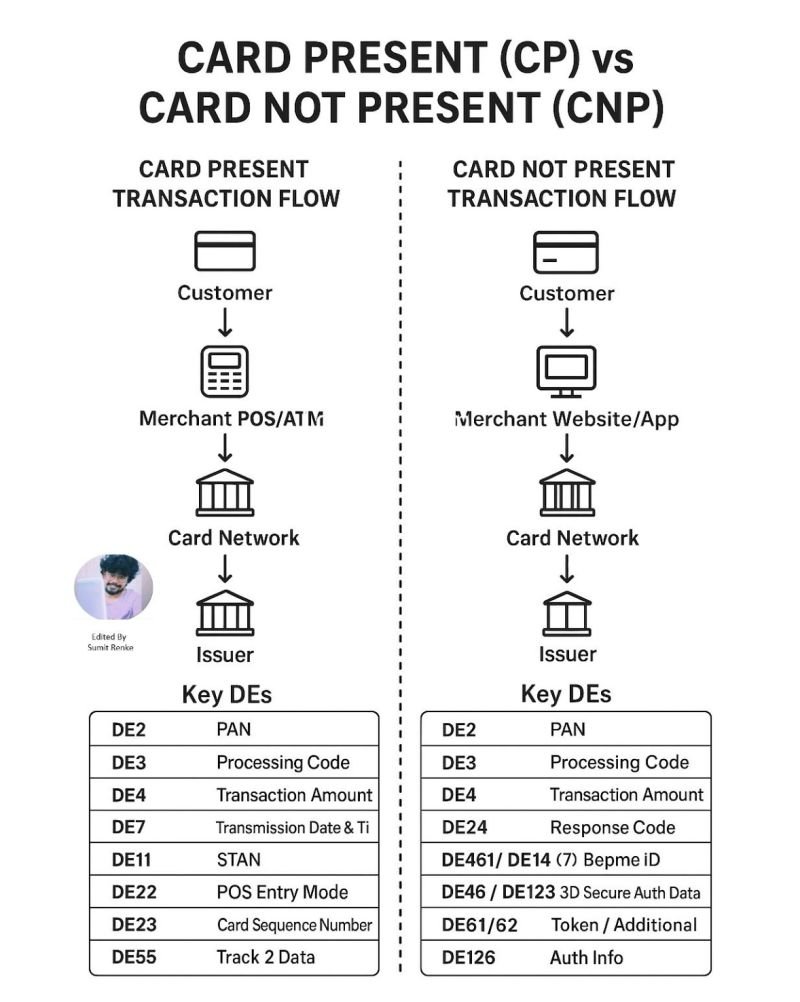
ISO 8583 represents the international standard for financial transaction messages. All card payments—whether at retail terminals, ATMs, online gateways, or fuel pumps—generate messages formatted according to this standard.
The standard defines message types, data elements, and the format for each field. Field 22 in the ISO 8583 message is designated as the POS entry mode. This field contains a two-to-three digit code that encodes two critical pieces of information: how card data was captured and how the PIN was captured.
The entry mode field is typically structured as a two-part code. The first two digits represent the card data capture method, while the third digit indicates the PIN capture method. Together, they form the complete entry mode code for the transaction.
For example, code 021 indicates the card was read by a magnetic stripe reader with PIN entry by the customer on a terminal keypad. Code 051 shows the card was read by a chip reader with PIN entry.
Understanding the structure of field 22 is essential for professionals seeking to comprehend why specific transactions behave as they do during the authorization process.
Essential POS Entry Mode Codes
Not every code in the ISO 8583 specification has practical significance for daily operations. The following codes appear in real-world transactions and have direct implications for card data processing:
Card Data Capture Codes (First Two Digits)
- Code 01: Card data manually keyed by the operator with no physical card present. The operator enters the card number, expiration date, and other details. This is standard for card-not-present transactions.
- Code 02: Card read by magnetic stripe reader. The terminal captured track data from the card’s magnetic stripe. This is the standard code for swipe transactions.
- Code 05: Card read by integrated circuit card reader (chip reader). The chip communicated with the terminal. This is the code for EMV chip transactions.
- Code 07: Card data obtained via contactless reading (NFC or tap-to-pay). The card or device was tapped against a contactless reader.
- Code 79: Card read by chip but fell back to magnetic stripe because the chip transaction couldn’t be completed. This EMV fallback code is significant because these transactions face intense issuer scrutiny.
- Code 80: Chip read but card identified as magnetic stripe with chip indicator. This is less common.
- Code 90: Card read by magnetic stripe reader with full track data captured. This original track read code from older transaction formats functions similarly to code 02 but specifically indicates full unaltered track data transmission.
- Code 91: Card data read by contactless reader using magnetic stripe data rather than chip data. This applies to contactless transactions using magnetic stripe emulation.
PIN Capture Codes (Third Digit)
The third digit indicates how the PIN was processed:
- Digit 0: No PIN entered or PIN capture method unknown.
- Digit 1: PIN entered by customer on PIN entry device.
- Digit 2: PIN entered but PIN entry device not certified.
- Digit 5: PIN pad capable of capturing PIN but no PIN entered for this transaction.
- Digit 9: PIN capture method unknown.
Most Relevant Combined Codes

- Code 021: Magnetic stripe swipe with PIN entered. Standard for swiped debit card transactions with PIN verification.
- Code 020: Magnetic stripe swipe with no PIN. Standard for swiped credit card transactions where PIN isn’t required.
- Code 051: Chip read with PIN entered. Standard for EMV chip debit transactions.
- Code 050: Chip read with no PIN. Standard for EMV chip credit transactions.
- Code 010: Manually keyed transaction with no PIN. Standard for card-not-present transactions where the operator typed card details.
- Code 901: Full track data magnetic stripe read with PIN. Older format code for swiped debit transactions transmitting full track data.
- Code 900: Full track data magnetic stripe read with no PIN. Older format code for swiped credit transactions with full track data.
Strategic Implementation: Maximizing Approval Rates
Understanding the codes is fundamental; implementing them strategically is where expertise matters. This section covers practical application:
Step 1: Identify Your Card Data Type
Before considering entry modes, identify what data you’re working with. Do you have magnetic stripe track data only? Track data with PIN? CVV data for card-not-present transactions?
The data type determines which entry mode codes are appropriate. Presenting chip transaction codes with magnetic stripe data creates mismatches that trigger declines. Similarly, presenting PIN transaction codes without actual PIN data causes inconsistencies.
Step 2: Match Entry Mode to Data Type
For magnetic stripe track data without PIN, the appropriate entry mode is 020 or 900, depending on the terminal and processor. These codes indicate a magnetic stripe read with no PIN, consistent with credit card swiping.
For magnetic stripe track data with PIN, the appropriate entry mode is 021 or 901, indicating magnetic stripe read with PIN entry, consistent with debit card transactions at ATMs or PIN-enabled terminals.
For card-not-present transactions using CVV data, the appropriate entry mode is 010, indicating manual key entry with no PIN.
Step 3: Understand Terminal Behavior at Your Target
Different terminals transmit different entry mode codes based on their configuration. Most retail terminals automatically assign the correct entry mode based on how the card was read. However, understanding what code a specific terminal type assigns helps you select appropriate targets for your card data.
A gas station pump accepting magnetic stripe transactions generates a code 020 or 900 transaction. An ATM accepting magnetic stripe with PIN generates a code 021 or 901 transaction. A manually operated retail terminal where a cashier keys in the card number generates a code 010 transaction.
Selecting a terminal whose natural entry mode matches your data type eliminates one of the most common causes of unnecessary declines.
Step 4: Be Aware of Fallback Transaction Scrutiny
Code 79, the chip fallback code, is one of the most scrutinized entry modes in the payment system. When a chip card fails and falls back to magnetic stripe, the issuer recognizes an unusual event occurred. In 2026, many issuers automatically decline chip fallback transactions or require additional verification.
For operators using cloned magnetic stripe data at terminals expecting chip cards, chip fallback presents significant risk. The decline rate on fallback transactions is substantially higher than on standard magnetic stripe transactions. Avoiding terminals that trigger fallback entirely is the cleaner approach.
Step 5: Monitor and Adjust Based on Results
Track your results by terminal type, entry mode, and data source. If a particular terminal type consistently produces declines that can’t be explained by bad data, the entry mode generated by that terminal may be creating issuer flags. Switch terminal types and compare results.
Advanced Tactics: System-Level Thinking
The operators who achieve consistently high approval rates don’t focus on individual transactions. They think in systems. Every transaction component interacts with every other component, and optimizing the system as a whole produces better results than optimizing any single element.
The Authorization Chain
A transaction doesn’t go directly from the terminal to the issuing bank. It passes through multiple layers: the terminal, the acquirer, the card network,
and finally the issuing bank. Each layer applies its own rules and filters.
The POS entry mode influences decisions at multiple points in this chain, not just at the issuing bank. The acquirer might filter transactions based on entry mode. The card network could apply different rules based on the code. Understanding this chain helps you anticipate where a rejection might occur and why.
Risk Scoring Models
Issuing banks use sophisticated risk scoring models to evaluate transactions in real time. The POS entry mode is one input into this risk score, alongside transaction amount, merchant category code, geographic location, time of day, and the cardholder’s transaction history.
A transaction with a consistent, expected entry mode scores lower on the risk model than a transaction with an unusual or mismatched entry mode. Minimizing risk score is the goal. Every field in the transaction message is an opportunity to either reduce or increase the risk score.
Merchant Category Codes
The merchant category code works alongside the entry mode to define the transaction context. A magnetic stripe swipe at a grocery store has a different risk profile than a magnetic stripe swipe at a jewelry store. Matching your entry mode to the merchant category code of your target creates a more internally consistent transaction that scores lower on risk models.
Geographic Consistency
The entry mode also interacts with the geographic data in the transaction. A chip transaction in a region where chip acceptance is standard is less suspicious than a magnetic stripe fallback transaction in the same region. In countries where EMV adoption is near universal, magnetic stripe transactions at standard retail terminals already carry elevated scrutiny regardless of entry mode.
In 2026, the US still has areas with magnetic stripe acceptance, particularly at independent retailers, older gas pumps, and third-party ATMs. These are the environments where magnetic stripe entry mode codes generate the least additional scrutiny.
System-Level Optimization Summary
The highest performing operators in 2026 optimize all of the following simultaneously: data quality, entry mode match, terminal selection, merchant category consistency, transaction amount relative to account profile, and time of transaction. No single element dominates. The system works when all elements are aligned.
Common Transaction Layer Mistakes
Professionals often make these critical errors when working with POS entry modes:
- Using chip entry mode codes with magnetic stripe-only data
- Attempting PIN transactions with no PIN data
- Targeting EMV-only terminals with magnetic stripe cloned cards
- Ignoring the merchant category code when selecting a target
- Using high-value transaction amounts at merchant categories that rarely see high-value transactions
- Not tracking results by entry mode and terminal type
Professional Tips for Entry Mode Optimization
For optimal results, consider these expert recommendations:
- Research the terminal type at your target before attempting a transaction. Different terminal brands and models transmit different entry mode codes by default.
- Use the same entry mode consistently when testing a new data batch. Mixing entry modes across a test batch makes it impossible to identify which variable caused the decline.
- Pay attention to the third digit of the entry mode code. A PIN-capable terminal that didn’t receive a PIN transmits a different third digit than a terminal that isn’t PIN-capable at all. These distinctions matter to issuer risk models.
- In 2026, contactless transactions using magnetic stripe emulation (entry mode code 91) represent an underutilized approach in some markets. Contactless terminals in lower-security environments may apply different scrutiny levels than contact card readers.
Industry Expert Insights for 2026
The payment processing layer has become significantly more sophisticated over the past three years. Machine learning models now analyze transaction patterns at the field level, meaning anomalies in any single ISO 8583 field can trigger real-time declines that would have passed unnoticed in older systems.
Field 22 is specifically monitored for consistency with other fields. An issuer’s system now flags transactions where the entry mode is inconsistent with the device fingerprint of the terminal, the geographic profile of the merchant, or the historical transaction patterns of the account.
The practical implication is that transaction layer knowledge is no longer optional for professionals who want consistent results. The era of simply processing a card and hoping for approval is over. The professionals who succeed in 2026 understand the message layer and position every transaction to be as internally consistent as possible.
Real-World POS Entry Mode Scenarios
Scenario One:
An operator uses magnetic stripe track data at a gas station pump. The pump generates a code 900 transaction (full track data with no PIN). The transaction is consistent with the data type and merchant category. The transaction is approved.
Scenario Two:
An operator attempts to use magnetic stripe data at a retail terminal that normally processes chip transactions. The terminal cannot read the chip because the cloned card has no chip. It falls back to magnetic stripe and generates a code 790 transaction. The issuer’s fraud system flags the chip fallback at a merchant where chip transactions are standard. The transaction is declined.
Scenario Three:
An operator uses a dump with PIN at an ATM. The ATM generates a code 021 transaction (magnetic stripe with PIN). The PIN matches the data. The entry mode is consistent with the transaction type. The withdrawal is approved.
Scenario Four:
An operator manually keys card data into a terminal set to card present mode. The entry mode generated is inconsistent with a manually keyed transaction. The issuer’s system detects the mismatch between key entry data and card present entry mode. The transaction is declined.
Actionable POS Entry Mode Strategies
Implement these strategies for improved transaction outcomes:
- Learn the core entry mode codes before your next operation
- Match your entry mode to your data type
- Avoid chip fallback transactions entirely
- Research terminal types at your target
- Track results by entry mode
- Think at the system level, not the transaction level
- Source quality data from verified vendors to ensure the underlying data supports the entry mode you are targeting
POS Entry Mode Code Reference Table
| Entry Mode Code | Card Data Capture Method | PIN Capture Method | Typical Use Case |
|---|---|---|---|
| 010 | Manually keyed | None | Card-not-present (CNP) transactions |
| 020 | Magnetic stripe | None | Swiped credit card transactions |
| 021 | Magnetic stripe | PIN entered | Swiped debit card transactions |
| 050 | Chip read | None | EMV chip credit transactions |
| 051 | Chip read | PIN entered | EMV chip debit transactions |
| 071 | Contactless | None | Tap-to-pay credit transactions |
| 072 | Contactless | PIN entered | Tap-to-pay debit transactions |
| 090 | Magnetic stripe (full track) | None | Legacy magnetic stripe transactions |
| 091 | Magnetic stripe (full track) | PIN entered | Legacy debit transactions |
| 791 | Chip fallback to magnetic stripe | PIN entered | EMV fallback transactions |
Summary of POS Entry Mode Codes
POS entry mode codes represent a critical and often overlooked element of the transaction layer. Understanding ISO 8583 field 22 provides direct insight into why transactions succeed or fail at the authorization layer, independent of data quality. Matching your entry mode to your data type, terminal choice, and merchant category creates internally consistent transactions that score lower on issuer risk models. Advanced system-level thinking combines all transaction fields into a coherent profile that maximizes approval rates.
Frequently Asked Questions
What is a POS entry mode?
A POS entry mode is a code in the payment transaction message that tells the acquiring bank and card network how the card data was captured at the point of sale. It is encoded in field 22 of the ISO 8583 transaction message.
What is POS entry mode 22?
POS entry mode 22 refers to field 22 in the ISO 8583 financial transaction message standard. This field contains the entry mode code that describes how the card was read and how the PIN was captured during the transaction.
What is POS entry mode 90?
POS entry mode 90 indicates that the card was read by a magnetic stripe reader and full unaltered track data was captured and transmitted in the transaction message. It is one of the standard codes for a swiped card transaction.
What does POS entry mode 021 mean?
POS entry mode 021 means the card data was captured by a magnetic stripe reader and the PIN was entered by the customer on a PIN entry device. This is the standard code for a swiped debit card transaction with PIN verification.
Why do chip fallback transactions get declined?
Chip fallback transactions, identified by entry mode code 79, are heavily scrutinized by issuers because they occur when a chip transaction fails and the terminal reverts to magnetic stripe. This is a common pattern in card fraud, so issuers apply elevated risk scores to fallback transactions, resulting in higher decline rates.
How does POS entry mode affect transaction approval?
The entry mode code is one input into the issuer’s real-time risk scoring model. A mismatch
between the entry mode and other transaction fields such as the data type, merchant category, or geographic profile increases the risk score and can trigger a decline even when the underlying card data is valid.
What is the best entry mode for magnetic stripe transactions?
For magnetic stripe transactions without PIN, entry mode 020 or 900 are the appropriate codes. For magnetic stripe transactions with PIN, entry mode 021 or 901 are appropriate. These codes should be naturally generated by the correct terminal type for each transaction.
Advanced Implementation Strategies
To achieve optimal results with POS entry mode codes, professionals must develop a comprehensive approach that encompasses multiple aspects of transaction processing:
Data-Entry Mode Alignment
The foundation of successful transaction processing lies in perfect alignment between your data type and the entry mode code. This alignment ensures that the transaction appears legitimate to all processing layers and minimizes the risk of unnecessary declines.
Terminal Selection Protocol
Develop a systematic approach to terminal selection based on the entry modes they naturally generate. Create a database of terminal types and their typical entry mode outputs to streamline target selection for specific data types.
Risk Mitigation Techniques
Implement robust risk mitigation strategies that account for entry mode inconsistencies. This includes developing fallback procedures when primary targets become unavailable and establishing protocols for handling unexpected declines.
Performance Metrics Tracking
Establish comprehensive tracking systems that monitor approval rates by entry mode, terminal type, and data source. This data-driven approach allows for continuous optimization of transaction processing strategies.
Industry-Specific Considerations
Different industries present unique challenges and opportunities regarding POS entry mode optimization:
Retail Environments
Retail terminals typically offer multiple entry options, making them versatile targets for various data types. Understanding which entry modes specific retailers prioritize can significantly improve approval rates.
Automated Fuel Dispensers
Gas station pumps often have predictable entry mode patterns, making them valuable targets for specific data types. However, they may also implement additional security measures that must be accounted for in strategy development.
ATM Networks
ATMs provide consistent entry mode environments but often feature enhanced security protocols. Successful ATM transactions require precise data-entry mode alignment and thorough understanding of network-specific requirements.
E-commerce Platforms
While not traditional POS environments, online payment gateways have their own equivalent entry mode indicators that must be understood for optimal CNP transaction success.
Future Trends in POS Entry Mode Processing
The payment processing landscape continues to evolve, with several emerging trends that will impact POS entry mode strategies:
Enhanced Machine Learning Detection
Issuers are increasingly deploying sophisticated machine learning algorithms that analyze entry mode patterns across multiple transactions to detect anomalies that might indicate fraudulent activity.
Dynamic Risk Assessment
Real-time risk assessment systems are becoming more adept at evaluating entry mode consistency with other transaction parameters, requiring more sophisticated alignment strategies.
Biometric Integration
The integration of biometric verification with traditional entry modes creates new code combinations that must be understood for optimal transaction processing.
IoT Payment Expansion
The growing network of Internet of Things (IoT) payment devices introduces new entry mode scenarios that must be addressed in comprehensive processing strategies.
Technical Implementation Guide
For technical professionals seeking to optimize POS entry mode utilization, consider these implementation guidelines:
Message Structure Analysis
Develop expertise in analyzing complete ISO 8583 message structures to identify how entry modes interact with other fields and how these relationships impact authorization decisions.
Terminal Emulation Techniques
Advanced operators may benefit from understanding terminal emulation techniques that allow for more precise control over entry mode generation in specific environments.
Real-time Monitoring Systems
Implement comprehensive monitoring systems that track entry mode performance across multiple dimensions to identify optimization opportunities quickly.
Protocol Adaptation Strategies
Develop flexible approaches that can adapt to protocol changes and new entry mode code introductions as the payment processing landscape evolves.
Professional Development Recommendations
To maintain expertise in POS entry mode optimization, professionals should:
Continuous Education
Stay informed about changes to ISO 8583 standards and new entry mode code introductions through industry publications and technical forums.
Practical Experience
Gain hands-on experience with diverse terminal types and processing environments to develop practical knowledge of entry mode behaviors in real-world scenarios.
Network Building
Connect with other professionals in the payment processing industry to share insights and strategies for optimizing entry mode utilization.
Tool Development
Develop custom tools and utilities that streamline entry mode analysis and optimization processes for specific operational requirements.
For comprehensive carding tools and resources, visit cardingsnipers.com, your trusted source for professional-grade payment processing solutions. Their extensive catalog includes the latest tools for analyzing and optimizing POS entry mode codes across diverse payment environments.
Cybersecurity Perspective
From a cybersecurity standpoint, understanding POS entry mode codes reveals critical vulnerabilities in payment processing systems. These codes, while designed to enhance transaction security, can potentially be exploited by those with malicious intent. Financial institutions must implement robust monitoring systems to detect inconsistencies between entry modes and actual transaction parameters.
The increasing sophistication of fraud detection systems in 2026 demonstrates the ongoing arms race between security professionals and those seeking to exploit payment system vulnerabilities. Continuous innovation in authentication methods and transaction verification remains essential to stay ahead of emerging threats.
Conclusion: Transaction Layer Excellence
The professionals who achieve optimal results in 2026 aren’t just those with the best data—they’re those who understand every layer of the transaction system. POS entry mode codes represent one of the most powerful and least understood layers available.
Apply the knowledge in this guide to diagnose declines, optimize terminal selection, and build transactions that are consistent from the data layer to the authorization layer.
For comprehensive carding tools and resources, visit cardingsnipers.com, your trusted source for professional-grade payment processing solutions.